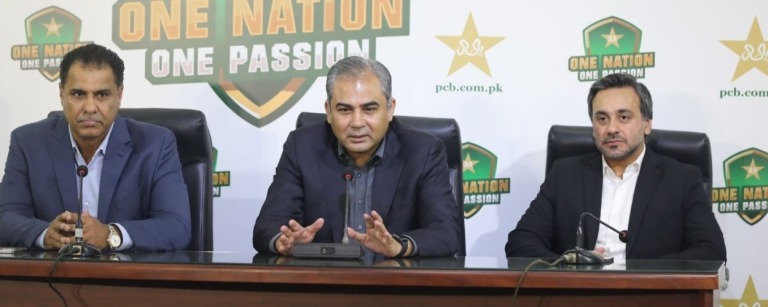
The Pakistan Cricket Board (PCB) has announced a major overhaul of its player contract system, England have been dealt another injury blow ahead of the second Test against New Zealand at The Oval, with seamer Ollie Robinson ruled out due to soreness in his right knee.
The setback comes at an unfortunate time for the 32-year-old, who had only recently forced his way back into the Test side after a two-year absence.
Robinson made an immediate impact on his return during the series opener, taking seven wickets in the match, including a three-wicket burst in his first over, reaffirming the attributes that once made him a key figure in England’s attack.
However, his latest injury again raises questions over his durability at the highest level. His previous Test appearance came in Ranchi in February 2024, where he bowled just 13 overs and did not feature in the second innings.
Fitness concerns have repeatedly disrupted his international career, and after a promising return at Lord’s, he will now be forced to wait to build further momentum.
England have confirmed that Robinson will remain with the squad and is targeting a return for the third Test at Trent Bridge, which begins on June 25.
His absence adds to England’s selection concerns ahead of the second Test.
Ben Stokes and Gus Atkinson are already unavailable while an investigation continues into an incident at a London nightclub, leaving the hosts facing several forced changes from the side that won the series opener.
Jofra Archer is expected to come into strong contention for selection after rejoining the squad following his IPL commitments and training at The Oval over the weekend.
England are also monitoring the availability of wicketkeeper Jamie Smith, who is awaiting the birth of his second child.
Meanwhile, New Zealand have also been forced to adapt following Kane Williamson’s retirement from international cricket. Will Young has joined the squad as his replacement ahead of the second Test. introducing a format-based structure that replaces the traditional A, B, C, and D categories.
PCB chairman Mohsin Naqvi unveiled the new model on Monday ahead of the 2026 central contracts cycle. The board says the changes will create clearer career pathways, improve accountability, and help balance the demands of international and franchise cricket.
Under the new structure, players will receive contracts based on their primary playing formats rather than a single grading system.
The highest level is Track AB, which covers players who compete in both Test and ODI cricket. This category recognizes cricketers who can perform consistently across the two formats. If a Track AB player appears in a T20 International, the PCB will treat it as a situational selection rather than a change in category.
Track A focuses exclusively on Test specialists. The PCB created this category to support long-format cricket and allow players to prioritize first-class and Test commitments.
Track BC covers players who feature in both ODIs and T20 Internationals. This track serves as the main pathway for Pakistan’s white-ball specialists and combines limited-overs players into one category.
Track C is reserved for T20 specialists and players heavily involved in franchise cricket. The PCB says this category provides flexibility while ensuring players remain available for national team duties.
Track D acts as a development pathway for emerging cricketers progressing through the National Cricket Academy and Pakistan’s high-performance system.
Each senior category will contain two internal tiers, allowing players to move up or down based on form and performance.
The PCB says the new model recognizes players according to the specific demands of their formats and creates a more transparent contract system.
Naqvi said the structure gives players and stakeholders greater clarity while helping the board make decisions based on clearly defined roles and expectations.
The new framework will take effect from the 2026 central contracts cycle. Players will go through a three-stage assessment process that includes medical and fitness evaluations, mandatory domestic cricket participation, and format-specific performance reviews.
The PCB has placed player welfare and domestic cricket at the center of the new system. The board has also introduced targeted incentives to protect Test cricket as franchise leagues continue to grow around the world.
Naqvi said cricket boards across the globe face similar challenges in balancing Test cricket with franchise opportunities, and Pakistan has chosen structural reform to address those issues.
The PCB has not disclosed individual player categories or financial details. However, officials describe the overhaul as a long-term strategy designed to align Pakistan cricket with modern demands while preserving the strength and importance of the traditional format.